


The Hidden Cost of Inaccuracy: Why Manual Inventory is Eroding Your Bottom Line
3/22/20262 دقيقة قراءة

Introduction
In the fast-paced industrial and retail landscape of the Kingdom of Saudi Arabia, data is the new currency. As we align with the digital transformation goals of Saudi Vision 2030, the methods we use to track our physical assets must evolve. For many organizations, the traditional "manual count" is no longer just an administrative task—it is a significant financial risk.
The Reality of Manual Counting
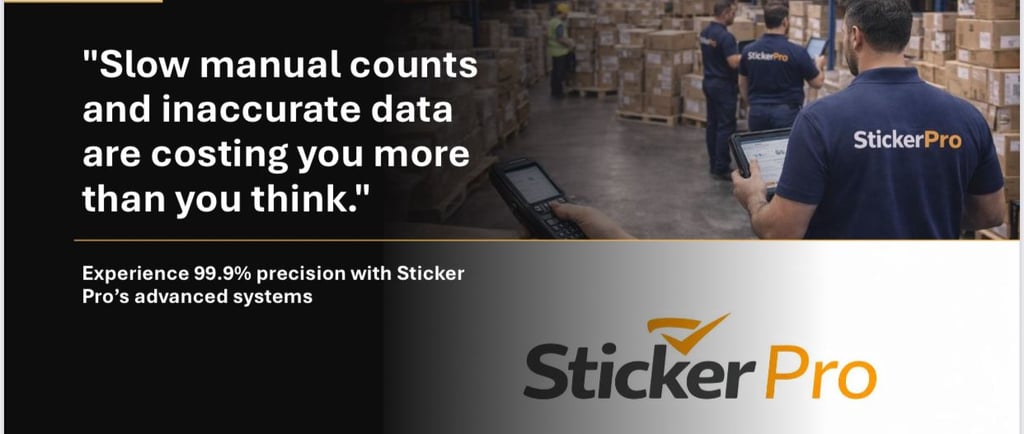
When we say, "slow manual counts and inaccurate data are costing you more than you think," we are not merely echoing a popular adage; we are stating a mathematical truth. Manual processes are inherently prone to human error, which can lead to several critical issues:
- Disrupted Supply Chains: Inaccurate data can result in stockouts or overstocking, both of which tie up essential capital. This disruption can severely affect operational efficiency, leading to customer dissatisfaction and reduced sales.
- Increased Labor Costs: Relying on manual inventory counting requires significant human resources dedicated to a time-consuming process. This translates to higher labor costs without a proportional increase in accuracy.
- Reduced Decision-Making Agility: Manual processes often result in delayed access to vital data, hindering timely decision-making. As businesses navigate a rapidly changing marketplace, agility becomes paramount.
Impact on the Bottom Line
The impact of relying on manual inventory processes extends beyond liquid capital and into the very fabric of a business's financial health. When stakes are this high, even minor discrepancies can accumulate, leading to substantial losses over time. Consider the following:
- For every stockout incident, companies potentially lose sales and damage customer relationships, which can take months to repair.
- On the flip side, overstocking can result in increased holding costs, tying up funds that could be better utilized in growth initiatives.
- A reliance on outdated manual methods can lead to inaccurate forecasting and planning, driving further inefficiencies and increasing operating costs.
Moving Towards a Solution
To mitigate the hidden costs of inaccuracies in inventory management, businesses in Saudi Arabia must consider adopting automated inventory solutions. Technologies such as barcode scanning, RFID tracking, and advanced data analytics can lead to:
- Enhanced Accuracy: Automation reduces human error, leading to more reliable and accurate inventory records.
- Improved Efficiency: Streamlined processes decrease the time spent on inventory management, allowing teams to focus on value-added activities.
- Better Data Insights: Automated systems provide real-time data, enabling informed decision-making that can directly boost profitability.
In conclusion, the transition from manual inventory processes is not merely a choice but an imperative. To safeguard against the hidden costs of inaccuracy, embracing technological advancements is essential. This shift will not only protect but potentially enhance your bottom line.