


The Hidden Profit Driver in Retail: Understanding Inventory Accuracy
3/30/20262 دقيقة قراءة
The Importance of Inventory Accuracy in Retail
In the competitive landscape of retail, inventory accuracy is crucial for success. Maintaining precise stock levels is not just a logistical requirement; it is a fundamental aspect that directly impacts profitability. When retailers overlook the importance of accurate inventory, they often face significant financial repercussions.
The Consequences of Inaccurate Inventory
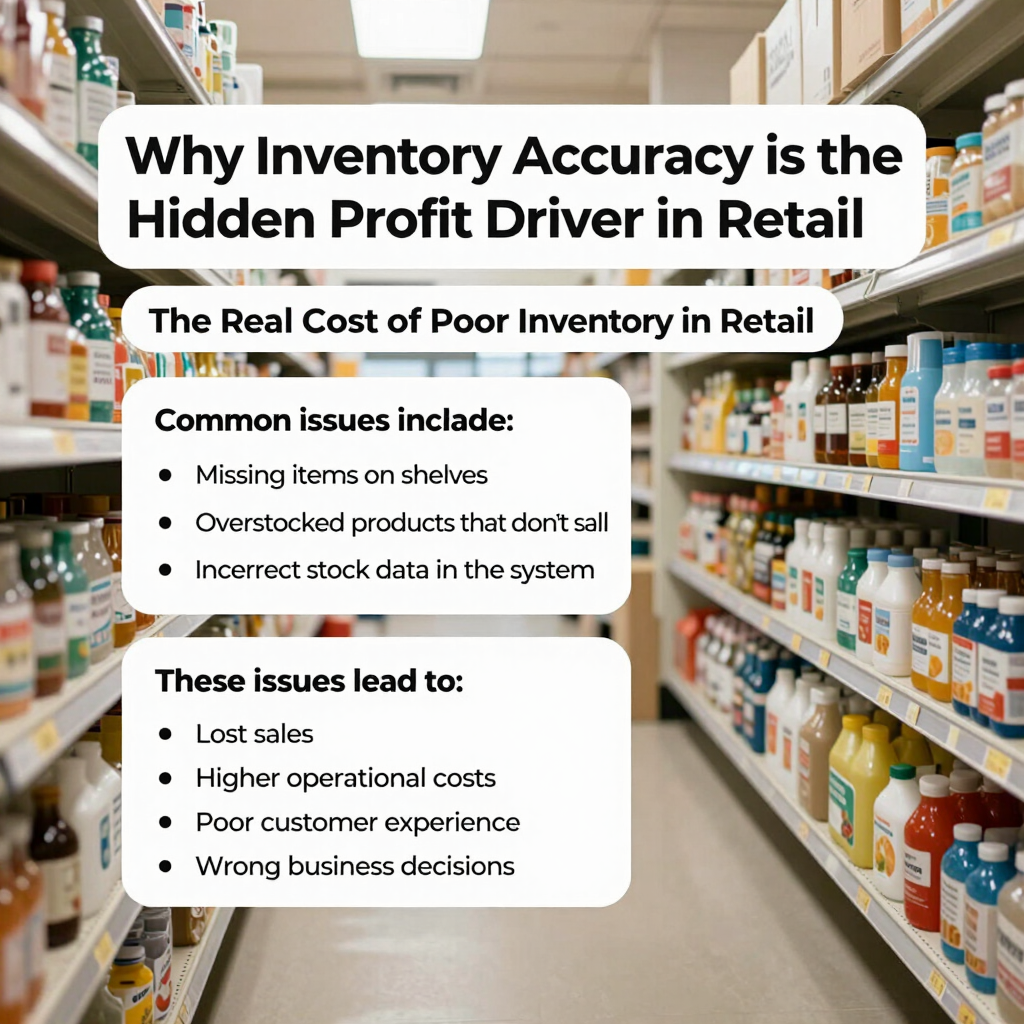
Inaccurate inventory can manifest in various frustrating ways, such as missing items on shelves, stock discrepancies, and overstocked products that remain unsold. These issues generate a ripple effect throughout the business, affecting sales opportunities and operational efficiency. Common problems associated with inaccurate inventory include:
- Missing items on shelves that result in lost sales.
- Overstocked products that consume capital and space without generating profit.
- Incorrect stock data leading to unreliable reports and misguided decisions.
- Time wasted on frequent stock counts to remedy discrepancies.
These inventory-related issues not only jeopardize a retailer's bottom line but can also tarnish customer experiences, prompting shoppers to seek alternatives. In a marketplace defined by competition, poor inventory management can lead to a loss of loyal customers who expect accurate stock availability.
Understanding the Root Causes of Inventory Inaccuracy
Retailers must acknowledge the reasons why inventory inaccuracies occur to implement effective solutions. Common causes include:
- Data entry errors or miscommunication among staff can lead to wrong inventory counts.
- Supply chain disruptions that result in delays and stock mismanagement.
- Inadequate inventory management systems that fail to track stock movements in real-time.
By identifying these root causes, retailers can develop strategic approaches to enhance inventory accuracy. This might involve investing in automated inventory management solutions, conducting regular audits, and training staff to foster accountability.
Strategies to Improve Inventory Accuracy
To effectively leverage inventory as a profit driver, it is essential for retailers to embrace best practices, including:
- Implementing advanced inventory management systems that offer real-time tracking.
- Regularly conducting physical inventory counts to reconcile discrepancies.
- Utilizing data analysis tools to forecast demand and adjust stock levels accordingly.
Through these strategies, retailers can minimize inaccuracies, optimize stock levels, and ultimately enhance their profitability. In conclusion, accurate inventory may be the hidden profit driver in retail, and prioritizing it could be the key to achieving sustainable success in an always-evolving market.